

Get To Know the Fundamentals of Water Heaters
Of all the large appliances in a typical home, water heaters aren’t exactly the most glamorous. They’re usually tucked away in the corner of the garage, basement, or utility closet and don’t get much attention until they stop working properly. So it’s safe to say that most homeowners probably don’t know much about their water heaters - especially if their unit was already there when they moved in.
But the water heater is one of the most important parts of a home’s plumbing system, so it’s worth learning more about, particularly when it comes time to maintain, repair, or replace the unit. So homeowners can keep reading to learn about the different kinds of water heaters, how to maintain them, and how to tell when they need to be repaired.
Different Water Heater Types
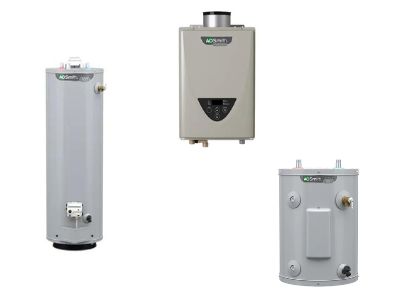 Water heaters can be divided into two main categories - conventional and tankless. Conventional water heaters feature a large storage tank in which water is heated and held until ready to use. On the other hand, tankless water heaters rapidly heat water on demand. They take up less space than conventional units, generally require less maintenance, and are more energy-efficient (since they’re not constantly keeping water hot). Conventional units last around 10-15 years, while tankless units last closer to 20.
Both conventional and tankless water heaters can be classified by the fuel they use to heat water. Gas and electric are the most common types. Gas water heaters feature gas burners connected to the home’s natural gas lines, and electric water heaters use heating coils. Gas-powered models tend to have lower operating costs since natural gas is cheaper than electricity in most areas. However, they usually require a little more maintenance and have a higher upfront cost.
Other less common types of water heaters include solar water heaters (which use solar panels to augment electrical heating power), heat pump water heaters (which draw heat energy from the ground or air to help heat water), and condensing water heaters (which use natural gas exhaust to heat water).
How To Perform Water Heater Maintenance
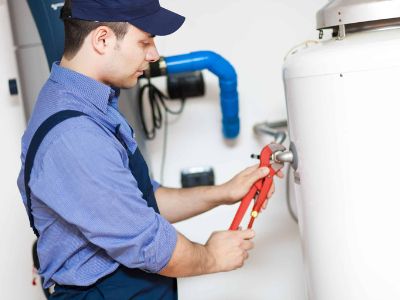 Every kind of water heater requires some maintenance, though some require a little more than others. Basic tankless water heater maintenance involves cleaning the water filters and air filters (the latter typically only applies to gas-powered units) and flushing the system to remove mineral scale.
For conventional units, maintenance is a little more involved. One of the most important tasks is to drain the water heater tank and flush it to remove any sediment collected at the bottom of the tank. This sediment buildup can dramatically hinder performance and eventually cause the tank to crack. Conventional units also have an anode rod inside the tank, which attracts corrosive substances to protect the tank from corrosion. The anode rod will gradually deteriorate, so it needs to be checked and replaced before it’s completely used up. Finally, valves (such as the temperature & pressure relief valve) must be tested for proper function.
Other maintenance tasks can include cleaning the gas burners, replacing electrical components, and testing safety devices. Water heater maintenance should be left to a professional plumber.
Common Signs of Water Heater Problems
Knowing how to maintain a water heater is extremely valuable, but it’s also vital to know when it’s time to call for water heater repair. Catching problems early can make the difference between minor repairs and a total water heater replacement!
The most common signs that a water heater is malfunctioning include strange noises coming from the unit (i.e., popping, whistling, banging, rumbling), discolored water, smelly water, no hot water, temperature fluctuations, hot water that runs out too quickly, and water leaking from the unit. These symptoms may point to any number of issues, so homeowners must contact their preferred local plumber to diagnose the problem and perform repairs as quickly as possible.
About Honest Abe’s Home Services
Honest Abe’s Home Services provides the residents of Osage Beach, MO, and the surrounding areas with expert diagnoses for all their plumbing, heating, and cooling problems. They offer flat-rate pricing, honest advice, and advanced technology. Call them today for water heater services in Osage Beach, MO.
)
)
)